Greyhounds Aren’t Skinny Labradors
Why Your Vet Needs to Know Their Numbers!
At The Savvy Sighthound, we love a bit of cheeky banter, but today’s topic is serious:
Greyhounds are not “just like any other dog” when it comes to bloodwork.
They are literally, a different breed. Thanks to centuries of being bred for performance, the basic nuts and bolts of a greyhound’s body chemistry are different from your average labrador, poodle, or collie. That means standard blood test results can often be misleading if your vet doesn’t know what’s normal for these glorious pointy-nosed wonders.
If your vet isn’t aware of greyhound-specific reference intervals, there’s a real risk of misdiagnosis — whether it’s mistaking a healthy hound for a kidney failure case or calling out “hypothyroidism” when there's nothing wrong at all.
Let's dive in (gracefully, like a lurcher onto a comfy sofa) into why this matters...
Why Greyhounds Are Different (And It’s Not Just the Legs)
Greyhounds’ blood values have adapted over generations of breeding for speed and stamina. Their red blood cells are packed with more haemoglobin to carry extra oxygen, and their muscle mass affects things like creatinine levels (important for kidney health testing).
It’s not just slight variations — it’s marked differences compared to the ‘average dog’!
A few highlights:
Higher Creatinine and SDMA: Healthy greyhounds can have what would be considered dangerously high creatinine levels in other breeds.
Higher Red Blood Cell Counts: They often have higher haematocrits, making them look like they’re on the brink of dehydration when they’re perfectly fine.
Lower White Blood Cell Counts and Platelets: A healthy greyhound may seem "immune-compromised" by normal standards when they're simply being their magnificent selves.
Lower Total T4 (Thyroid Hormone): Many healthy greyhounds would be incorrectly labelled hypothyroid based on general canine standards.
What Could Go Wrong?
Without greyhound-specific reference intervals:
Kidney disease might be wrongly diagnosed based on a ‘high’ creatinine.
Hypothyroidism might be misdiagnosed, leading to unnecessary (and expensive) lifelong medication.
Infections or anaemia might be missed because their normal bloodwork looks 'weird' to the uninitiated.
These aren’t little mistakes — they can massively impact your greyhound’s treatment plan, quality of life, and your wallet.
What Should Your Vet Know?
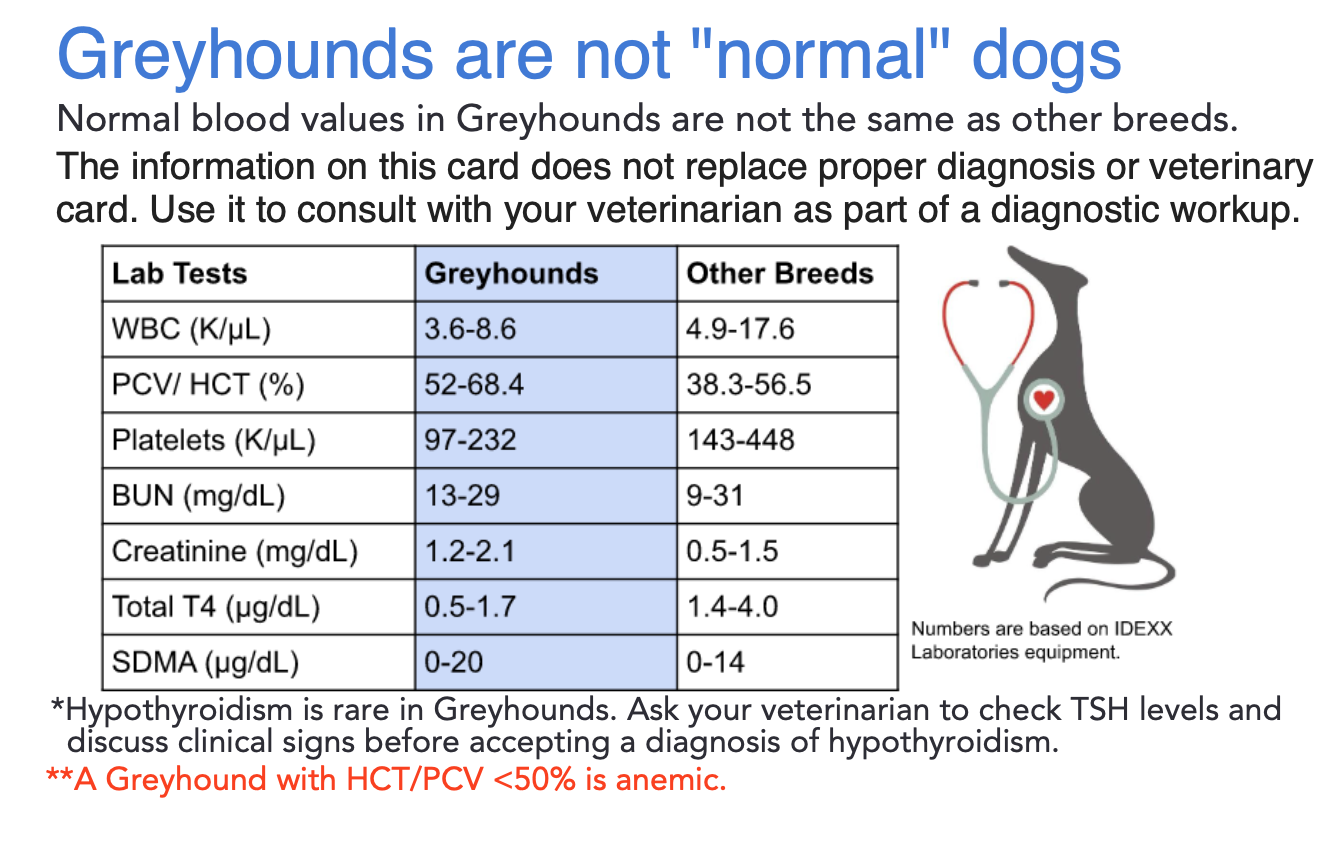
Thanks to studies like the recent IDEXX Greyhound-Specific Reference Intervals project, we now have solid breed-specific numbers. These are based on hundreds of healthy greyhounds (retired racers and pampered pets alike) and should be guiding your vet’s interpretations.
The takeaway?
Always ask your vet to interpret bloodwork using greyhound-specific reference ranges. And if they look at you like you’ve sprouted a second head? Well, it’s time for a gentle, savvy nudge (or a new vet).
We’re passionate, not preachy: we adore our greys, whippets, lurchers and longdogs, and we want their uniqueness celebrated — not mistaken for illness.
Kidney Testing — Special Note!
Because muscle mass affects creatinine, greyhounds often look like they have "poor kidneys" when they don’t. The IDEXX SDMA® Test is a much better indicator of kidney health in sighthounds, as it’s not influenced by muscle mass. That said — higher SDMA is normal for greyhounds too! IDEXX now suggests an upper SDMA limit of 20 μg/dL, compared to 14 μg/dL for most dogs.
Translation: Greyhounds break the rules. And that’s why we love them.
Thyroid Testing — Another Trap
Greyhounds naturally have lower thyroid hormone levels. Many healthy greys would flunk a ‘normal dog’ thyroid test. A proper diagnosis should consider symptoms and use greyhound-specific T4 and TSH levels. No jumping to conclusions, please!
Final Thought: Advocate for Your Hound
You know your dog best. Be that politely persistent person in the vet’s office who says,
"Are you using greyhound-specific reference intervals?"
If your vet welcomes the conversation — gold star for them - and if they don’t, well, you deserve someone who takes your dog's specialness seriously.
