

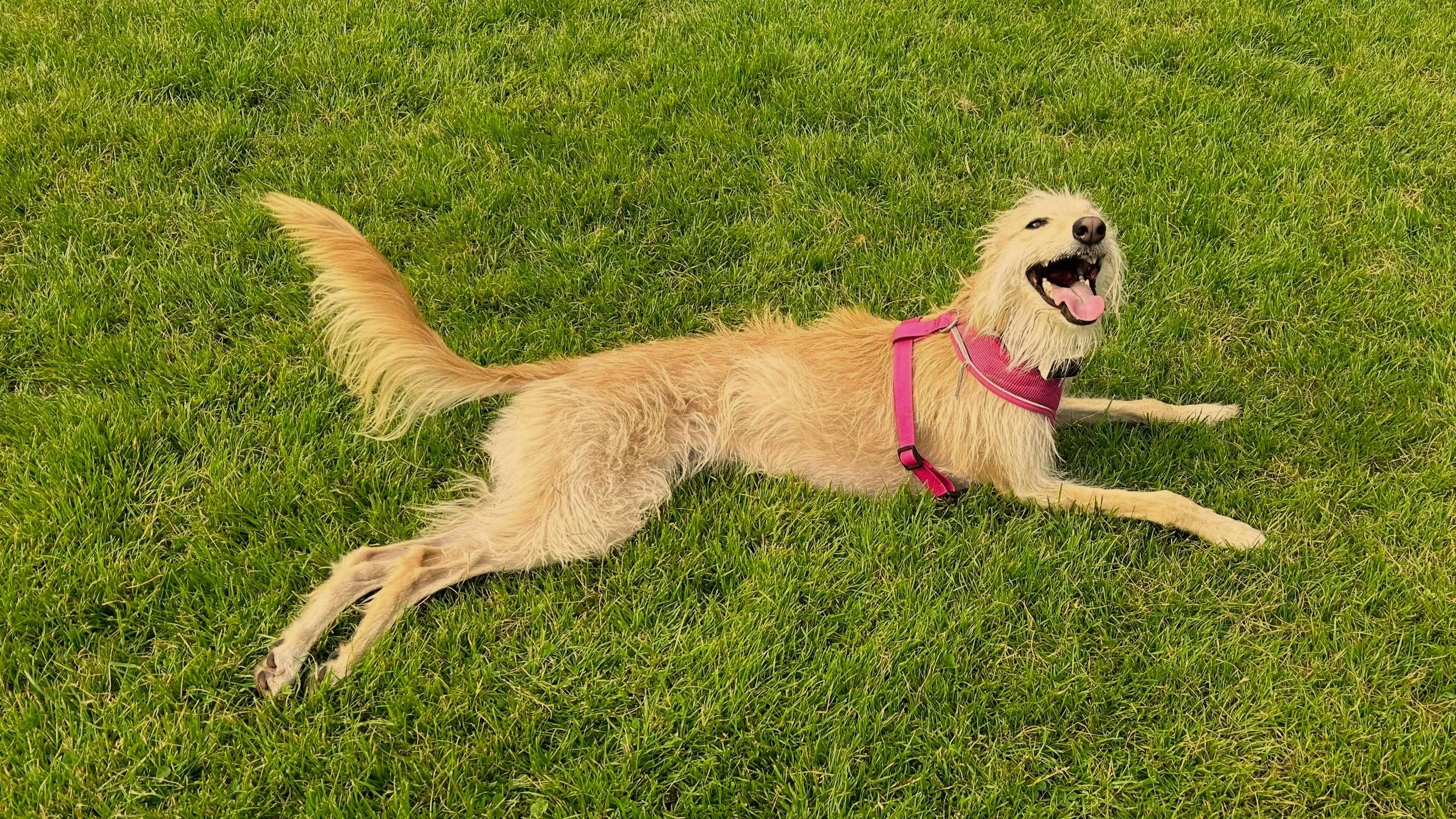
Adopting Sighthounds
Because no matter how much you prepare, nothing beats hearing what it’s actually like to bring home a sighthound who’s never seen a telly, a bin, or a set of stairs.
Spoiler Alert: You won’t stop at one!
Bringing home a sighthound is a bit like eating crisps. One leads to another, and then suddenly you’re explaining to your neighbours why your house is full of snoots and dog beds.
If you’re thinking about adoption – whether it’s your first dog, your fifth, or your first non-fluffy breed – this page is here to guide you through the basics, bust a few myths, and help you find the right dog, from the right place, at the right time.
Rescuing/adopting any animal is a big commitment. Be sure you’re ready and if you’re not certain, talk to a charity about fostering. This will give you an opportunity to decide if longer term adoption is for you. If you have recently adopted a hound and you’re struggling, get in touch - we can connect you with folks that offer help and guidance.
What you should know…(UK / Ireland)
In the UK and Ireland, most adoptable greyhounds are ex-racers. Some are retired after just a few races. Others never made it to the track. Some are bred for coursing. A growing number of lurchers also need homes, especially in Ireland where abandonment and overbreeding are real issues.
In both countries, adoption is managed by rescue charities rather than racing bodies. Some are large and well-resourced. Others are grassroots and volunteer-led. Most do an incredible job with very limited funding.
Things to be aware of:
Many Irish dogs are rehomed in the UK through cross-border partnerships.
Not all groups home directly to Ireland – some send dogs abroad.
Greyhounds in pounds in Ireland can be euthanised quickly if no space is found.
There is no formal greyhound-specific legislation protecting dogs after racing ends.
How the adoption process works
Each charity has its own process, but generally you will have to:
Complete an application form.
Arrange a home check – either in person or by video call.
Chat with a rehoming coordinator about your lifestyle, experience and preferences.
Get matched with a suitable dog (or shortlist a few).
Visit the dog, meet them in person (where possible), and complete adoption paperwork.
You’ll usually pay an adoption fee, which covers vet care, vaccinations, microchipping, neutering, and transport if needed. Some groups offer post-adoption support, training advice, or access to behaviourists.
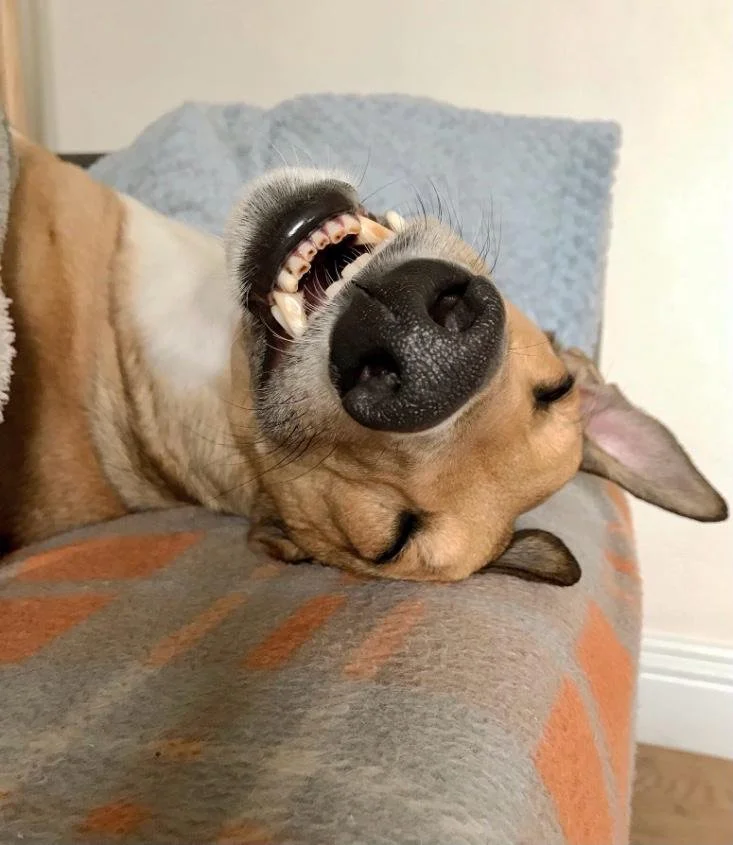
Fostering Saves Lives
If you’re not sure about a permanent commitment, fostering is a brilliant option.
Fosters provide a safe, calm home for a dog in transition. You get to see what life with a sighthound is really like, and they get a much-needed stepping stone from kennel to couch.
Fostering helps charities free up kennel space and gives dogs a better chance at adoption. Some dogs settle better in homes. Others need decompression time after racing. Either way, you’re making a huge difference.
(And yes, foster fails are very common. You’ve been warned.)
Questions to ask adoption charities (based on our experience)
Regardless of what type of hound you are considering, go and speak to the charity. They’ll arrange for you to have some of their hounds. The right one will come along and the staff at the rehoming charities really are fantastic at matching you with the right hound (if they know their stuff!).
Not all rescues operate the same way, and it’s OK to ask questions. A good charity will be happy to answer your questions and be honest about each dog’s needs.
-
Write out exactly what you are hoping for and things you need to work.
-
Are they ex-racers, strays, or surrendered pets?
-
It’s always good to know how much adjustment the hound will need before adopting them.
-
What about cats or children?
-
This should be standard but it’s good to check. Ask when the hound has a health check / dental. Are their nails short or overgrown.
-
Don’t feel that you have to do this alone. The charity should be in the background to support and advise.
-
Things happen - just ask.
-
There’s often a cost involved in rescuing a hound. The fee often barely covers veterinary fees.
-
We’d encourage everyone in the family to come and meet the hound.
The Sighthound Superpowers
-
Speed
A greyhound can hit 45mph in a few strides. Most of them, however, would prefer not to.
-
Grace
Even at rest, they carry themselves with a kind of quiet elegance. Until they flop off the sofa mid-roach.
-
Sleep
Greyhounds are fast. For about four minutes a day. The rest of the time, they are Olympic-level nappers.
-
Lurchers
Depending on what your hound is crossed with, you’re either nodding here or disagreeing!
Real Adopter Stories
We’ll be sharing real-life adoption stories from across Ireland and the UK – the good, the funny, and the slightly chaotic.
Coming soon:
“I didn’t plan to adopt a second. Then I met Esme.”
“My greyhound was scared of kettles. Now he won’t leave the kitchen.”
“Foster fail #3: send help (and biscuits).”
Types of Sighthounds
-
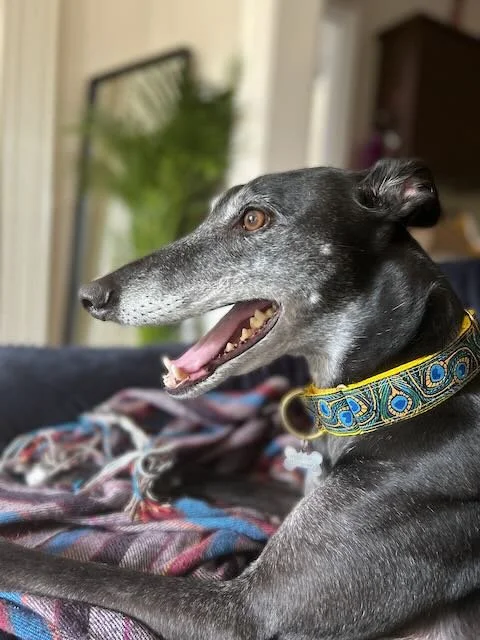
Greyhound
The OG of the sighthound world. Greyhounds are elegant, affectionate and surprisingly lazy for a dog that can outpace a motorbike. Most rescue greyhounds come from the racing industry, so they’ve got their own quirks and care needs.
Don’t be surprised if they’re scared of stairs, cling to you like Velcro, or try to nap in the fridge. They’re weird, quirky but absolutely adorable.
-
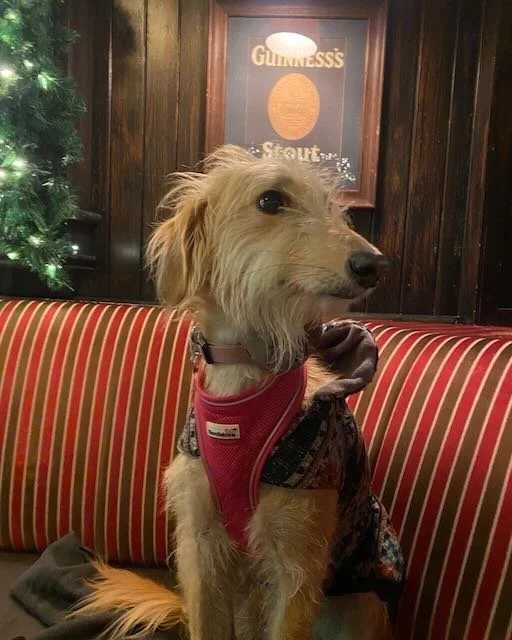
Lurcher
Not a breed, but a type. Lurchers are usually a cross between a sighthound (like a greyhound or whippet) and something else – often a terrier, collie or staffie. This makes them a bit of a lucky dip, in the best possible way.
They can be scruffier, more playful, and sometimes a bit more energetic than their greyhound cousins. Lurchers are common in rescue centres across the UK and Ireland and are just as charming (and just as capable of outrageous lounging).
-

Whippets
Whippets are basically pocket-sized greyhounds with heaps of sassiness and Mariah levels of demands. Still speedy, still snuggly, just a bit smaller and often a bit more energetic.
Some whippets are more sensitive or vocal than greys, but many of the same quirks apply. Coats in winter. Soft beds. Strong prey drive. Zero concept of personal space. Might end up demanding more cuddles than they deserve.
-

Salukis
The royal divas of the sighthound world. Salukis are graceful, gentle and often aloof. They’re stunning to look at, but not always the easiest to train or read.
If a greyhound is a sleepy uncle, a saluki is the slightly mysterious cousin who only visits when it suits them. Think Cleopatra crossed with Beyonce and a dash of madness.
-

Italian Greyhound
Teeny tiny sighthounds that look like they’ve been drawn by a fashion illustrator after a few too many…erm. Italian greys (or Iggies), are dainty, delicate, charming and completely bonkers.
They’re also always cold and will try to climb in under your clothing or covers (depending where you might be). They need warmth, attention and an understanding of their diva energy.
-
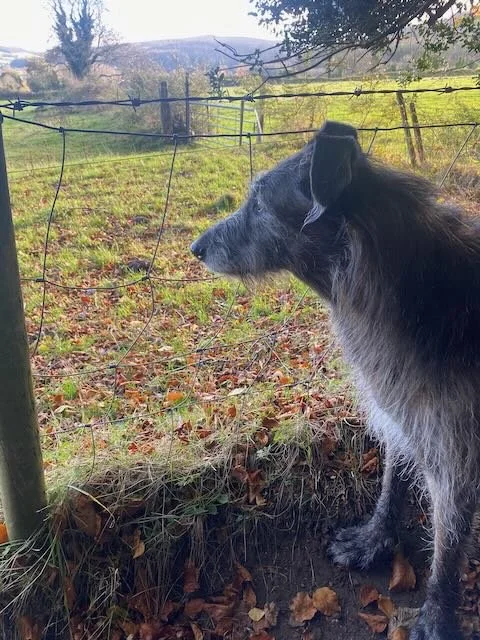
Borzoi, Wolfhound, Deerhound, Afghan and Co.
These are the giants (and glam-rockers) of the sighthound world. Less common in rescue, but no less enchanting.
Some have long flowing coats, some resemble deer in pyjamas, all share that same sighthound combination of grace, sensitivity and occasional goofiness.
Why We Say ‘Ex-Racer’ Instead of ‘Rescue’
We use the phrase ex-racer because it’s clear – it tells people where the dog came from and what they were bred to do. But make no mistake, our greyhounds are rescues.
Not all of them are formally “retired.” Many don’t get that far. Some never make it to the track at all. Others are discarded the moment they’re no longer useful. If they didn’t race or course, chances are they were used for underground racing, lamping, dog baiting, or simply passed between owners with no stability, structure or care.
In Ireland especially, many sighthounds are bred with no intention of ever seeing a licensed track. That doesn’t make their experience any less traumatic – or their need for rescue any less urgent.
So we say ex-racer for clarity. But we always mean rescue.
Because rescuing a greyhound isn’t about giving them a comfy retirement. It’s about giving them a second chance.