

Lurchers
A lucky dip with long legs.
Picture a greyhound that's been to night school. That's roughly a lurcher.
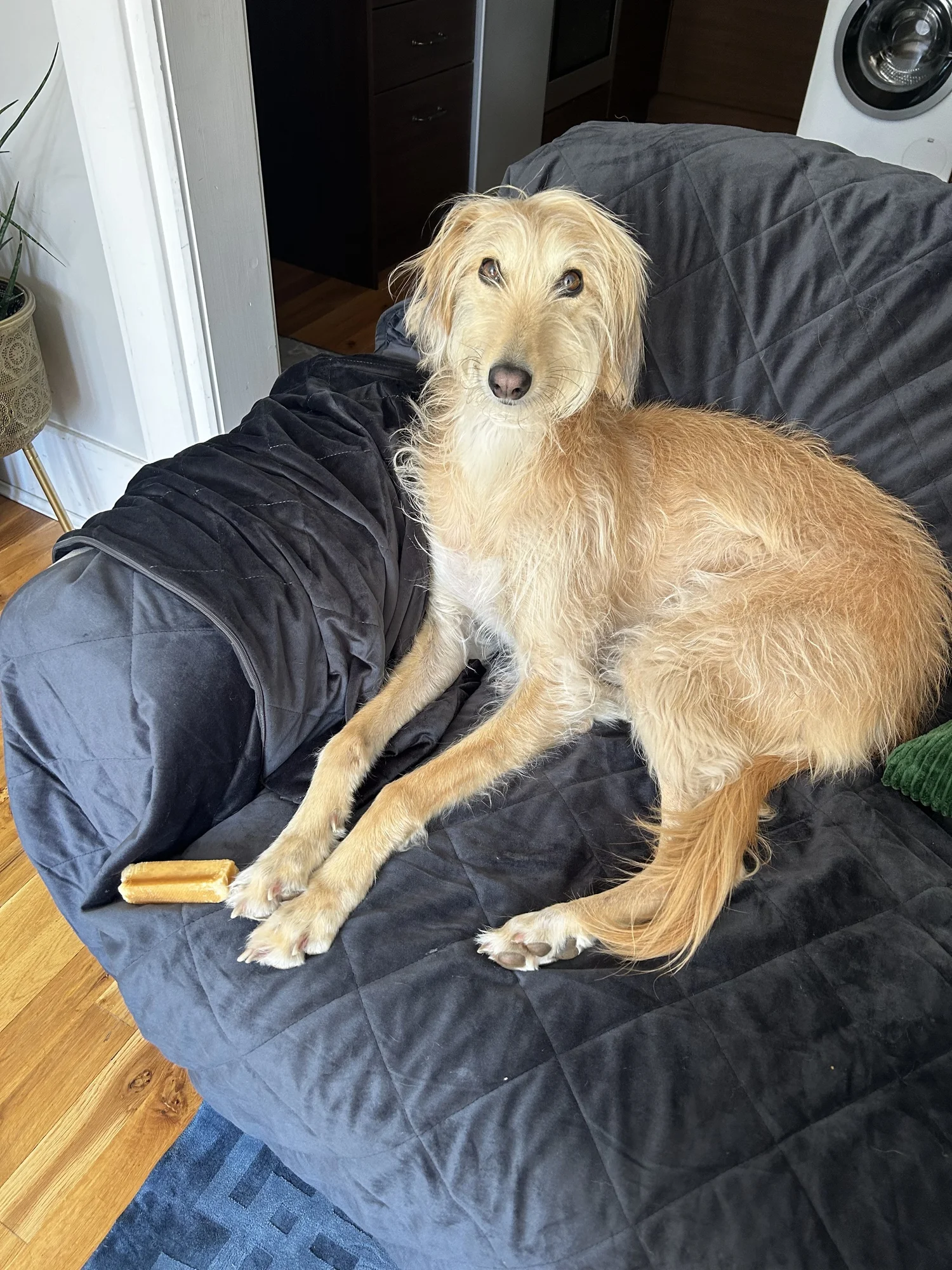
Part sighthound, part something else and entirely their own hound, a lurcher might be whippet-sized and wiry or tall enough to rest their chin on the kitchen counter while staring meaningfully at your toast. Some are sleek. Some look like they've been dragged backwards through a hedge and enjoyed every second. No two are quite the same, which is exactly why their owners love them.
Here's what makes a lurcher, where the name comes from and what they're like to share a home with.

 What makes a lurcher
 What size is a lurcher?
 Where the word comes from
 Game laws, poachers and working dogs
 Where lurchers in Ireland come from
 Living with a lurcher
What makes a lurcher
A lurcher is a sighthound, such as a greyhound, whippet, saluki or deerhound, crossed with another type of dog. Traditionally that other half is a working breed: A collie for brains, a terrier for grit. The idea was to breed for intelligence, speed and stamina all in one hound.
So a whippet crossed with a collie is a lurcher. So is a greyhound crossed with a terrier, or a whippet crossed with a Bedlington. Then lurchers get crossed with other lurchers, and the family tree turns into more of a hedge.
Which brings us to the honest answer to “What will it be like?” You don't really know what you're going to get. Two pups from the same litter can grow up looking like distant cousins, with completely different personalities to match.
A lurcher isn't a breed. There's no breed standard, and you won't find the lurcher on the main UK breed register's list of recognised breeds. Nobody's ever managed to agree what one should look like, and the lurchers seem perfectly happy with that. Less paperwork, more sofa.
Longdogs
A cross between two sighthounds, say a saluki and a greyhound, is traditionally called a longdog. These days most people call those lurchers too, so don't be surprised to see both words on the same kennel card. The hound won't mind either way.

What size is a lurcher?
Anything from “fits in a handbag” to “is that a pony?” Because there's no standard, the best guide is the parents, if anyone knows who they were.
For comparison, the official UK breed standards put a whippet at about 44 to 51cm at the shoulder and a show greyhound at about 69 to 76cm. A lurcher with whippet in the mix often lands at the smaller end. Add deerhound or wolfhound and you'll be looking up, not down.
Coats are just as much of a lucky dip: Smooth, rough, wiry, long or somewhere in between, in any colour going. Some look like a greyhound wearing a woolly jumper. Some look permanently windswept, even indoors. A few seem to change their minds about their coat from one season to the next.

Where the word comes from
“Lurcher” comes from an old English verb, lurch, a Middle English variant of lurk. It meant to lurk, skulk or steal. Before it was ever a hound, a lurcher was a petty thief: That sense is recorded in 1528. The hound came later, and dictionaries still describe it as a crossbred dog used especially by poachers.
So yes, the name more or less means “the lurker”. Anyone who's turned round at dinner to find one standing silently behind them, inches from their plate, will think that's entirely fair.
Game laws, poachers and working dogs
For centuries, English game laws kept hunting for people with land. The Game Act 1671 named lurchers outright. Anyone without land worth £100 a year was barred from keeping guns, bows, greyhounds, setting dogs, ferrets, nets and lurchers.
That's where the lurcher's reputation comes from. A greyhound was the hound of the gentry. A rough-coated crossbred that didn't look much like a greyhound, but could still catch a rabbit or a hare for the pot, drew far less attention. Fast, clever and quiet was the whole point.
You'll sometimes hear people talk about “lurcher men”, the countrymen who bred and worked these hounds and could judge a good one at a glance. The phrase conjures up tweed caps, muddy boots and a hound that never barks. It comes from the working world rather than the history books, so we won't pretend to know more than the records show.
There's more on the game laws in our History of Sighthounds.

Where lurchers in Ireland come from
If you meet a lurcher in Ireland today, there's a good chance you'll meet them in a rescue kennel. In our experience, and in what rescues tell us, many of the lurchers they take in were bred for hunting or coursing, then surrendered, dumped or found straying once they were no longer wanted.
There's no official count. The local authority dog control statistics include lurchers in the general figures rather than counting them separately, so rescues' own experience is the best picture we have.
We can't support coursing or lamping, and our Racing and Welfare page says why. What we can tell you is that the hounds who come out of that world very often make gentle, funny, deeply loyal pets. Plenty of them have never seen a sofa. It takes most of them about an afternoon to work out what one's for.

Living with a lurcher
Every lurcher is their own mix, so think of these as tendencies rather than promises.
- Gentle and affectionateMost are soft, cuddly and happiest leaning on your legs. Personal space is a concept, not a rule.
- Clever, and occasionally stubbornThe collie or terrier side can bring brains and an independent streak. They learn fast when they see the point, and develop selective hearing when they don't.
- Prey driveMost keep a strong urge to chase. Whether a lurcher can live with a cat or small pets depends on the individual, so ask the rescue what they know.
- RecallOften the weak spot. A lurcher who's spotted a rabbit has left the conversation. Secure spaces and a good lead are your friends.
- Escape artistsMany can clear a fence or squeeze through a gap you'd swear was too small. Check the garden before they do. They've already checked it.
- Short bursts, long napsA good run or a couple of decent walks, then hours on the sofa. Smooth-coated ones feel the cold, so a coat and a proper bed help.


"Ask three lurcher owners what a lurcher looks like. You'll get four answers."
A lurcher is a lucky dip. In our experience, it's the best kind.


Somewhere, a scruffy lurcher is practising their best sad face for you.